

Official websites use .gov
A .gov website belongs to an official government organization in the United States.

Secure .gov websites use HTTPS
A lock (
) or https:// means you’ve safely connected to the .gov website. Share sensitive information only on official, secure websites.


Isotopes as Environmental Tracers in Biological Specimens
Summary
High precision stable isotope ratio measurements are being used in biological specimens to provide new insights into environmental and climate processes and monitoring from polar to tropical ecosystems.
Description
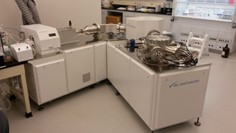
Multicollector inductively coupled plasma mass spectrometry (MC-ICP-MS) provides sensitive and precise measurements of stable isotope ratios and can be coupled to a variety sample introduction systems such as laser ablation and gas or liquid chromatography. The versatility and performance of MC-ICP-MS and its increasing availability has expanded the field of stable isotope research to new elements and new applications. The Environmental Isotopic Research Program at NIST Charleston in the Hollings Marine Laboratory performs work on analytical method development, standards development, interlaboratory comparisons, and developing new and improved applications toward marine environmental research and monitoring.
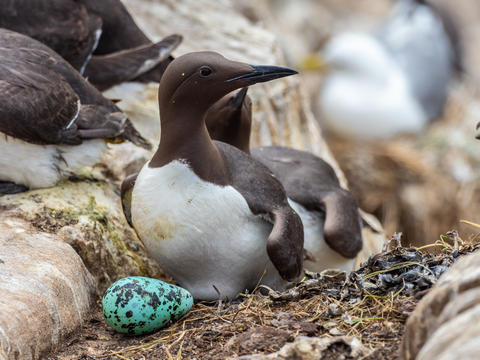
There is increasing interest in the analytical and environmental communities in using mercury isotopic fingerprinting to identify mercury sources and to better understand the biogeochemical cycling of mercury in the environment. The research activities NIST is engaged in will advance the application of these techniques by using samples from the NIST Biorepository to improve our understanding of fractionation of mercury in the environment, and by providing key standards for the measurement community. The first such projects utilized archived samples from the Seabird Tissue Archival and Monitoring Program (STAMP) to show that in the northern Bering Sea mercury isotope signatures (δ202Hg and Δ199Hg) in seabird eggs provide an effective means for discriminating terrestrial geogenic mercury sources from atmospheric/oceanic reservoirs in coastal marine environments. Future work will focus on more detailed isotopic characterization of terrestrial and oceanic mercury sources to allow quantitative source apportionment of mercury in Alaskan seafood, and tracking of long-term temporal changes of terrestrial mercury inputs resulting from permafrost and glacial melting. Over larger scales spanning the arctic and subarctic, mercury mass independent fractionation (Δ199Hg) tracks the degree of mercury photoreduction in the surface ocean, which is inhibited by sea ice and is the most important reaction driving the exchange of mercury with the atmosphere. These findings contribute to our ability to use stable isotopes of mercury to better understand its regional and global biogeochemical cycling, and how climate change (sea ice and permafrost melt) may affect this cycling. To advance the metrology associated with this new field of research, NIST has recently provided the mercury isotope research community with two new standards to underpin their measurements (RM 8610 Mercury Isotopes in UM-Almaden Mono-Elemental Secondary Standard, and SRM 1947 Lake Michigan Fish Tissue) and conducted an interlaboratory comparison with the top mercury isotope labs to assess measurement biases.

Boron is another isotopic system that NIST is heavily focusing on. The isotopic composition of boron (δ11B) in marine carbonates is well established as a proxy for ocean pH. Yet, interpretation of data from contemporary or palaeoceanographic carbonate samples requires rigorous assessment of analytical uncertainties for pH values derived from δ11B. NIST has produced a new boron reference material (RM 8610 Boron Isotopes in Marine Carbonates) in a synthetic carbonate matrix to allow analysts to assess the accuracy and precision of carbonate δ11B measurements throughout the entire procedural chemistry. In partnership with NOAA, NIST has also performed field experiments to test the efficacy of this approach in natural systems by collecting coral and calcified algae across a natural pH gradient around a shallow hydrothermal vent, and calibrating the boron isotope pH proxy from these samples against concurrent direct seawater pH measurements. These organisms are being collected in collaboration with NOAA, and archived and analyzed as biosensors by NIST to enhance broad-scale monitoring of ocean acidification. We are also using the boron pH proxy to reconstruct nearly a century of changes in ocean acidification in Hawaii using coral skeletal cores, and to investigate the etiology of a disease where corals develop calcified "tumors" called growth anomalies.
Major Accomplishments
- Analytical methods and laboratory protocols were developed and validated for mercury and boron isotopic analysis in environmental matrices.
- Interlaboratory comparison exercises conducted for both mercury and boron isotope analysis.
- Three new isotope standards completed or underway: RM 8610 and SRM 1947 for mercury isotopes, and RM 8301 for boron isotopes.
- Numerous isotopic research projects conducted using NIST Marine Environmental Specimen Bank samples ranging from coral reefs to the subarctic/arctic.
- Day RD, Stewart, JA, Young C, Brainard, RE, Butterfield, B. In prep. Field calibration of the δ11B-pH proxy in corals and calcified algae at a shallow hydrothermal vent and adjacent coral reef.
- Stewart, JA, Field D, Tolliver R, Young C, Stafford G, Day RD. In prep. Multi-decadal Boron isotope records of coral reef seawater pH from Hawaiian coral cores.
ASSOCIATED PRODUCTS
-
RM 8610 Mercury Isotopes in UM-Almaden Mono-Elemental Secondary Standard – This is the first solution secondary standard for mercury isotopes distributed by an NMI.
-
SRM 1947 Lake Michigan Fish Tissue – This is the first fish tissue reference material to have values assigned for mercury isotopes.
-
RM 8301 Boron Isotopes in Marine Carbonate – This material is a synthetic carbonate designed to mimic coral and foraminifera matrices. It was produced at the Hollings Marine Laboratory and is valued assigned for boron isotopes and trace elements by NIST and eleven international laboratories as part of an interlaboratory comparison.
RELATED PUBLICATIONS
1. Day, R. D., Becker, P. R., Donard, O. F. X., Pugh, R. S., and Wise, S. A., "Environmental specimen banks as a resource for mercury and mercury isotope research in marine ecosystems," Environmental Science-Processes & Impacts, 16, 10-27 (2014).
2. Day, R. D., Roseneau, D. G., Berail, S., Hobson, K. A., Donard, O. F. X., Vander Pol, S. S., Pugh, R. S., Moors, A. J., Long, S. E., and Beckert, P. R., "Mercury Stable Isotopes in Seabird Eggs Reflect a Gradient from Terrestrial Geogenic to Oceanic Mercury Reservoirs," Environ. Sci. Technol., 46, 5327-5335 (2012).
3. Day, R. D., Roseneau, D. G., Vander Pol, S. S., Hobson, K. A., Donard, O. F. X., Pugh, R. S., Moors, A. J., and Becker, P. R., "Regional, temporal, and species patterns of mercury in Alaskan seabird eggs: Mercury sources and cycling or food web effects?," Environmental Pollution, 166, 226-232 (2012).
4. Point, D., Sonke, J. E., Day, R. D., Roseneau, D. G., Hobson, K. A., Vander Pol, S. S., Moors, A. J., Pugh, R. S., Donard, O. F. X., and Becker, P. R., "Methylmercury photodegradation influenced by sea-ice cover in Arctic marine ecosystems," Nature Geoscience, 4, 188-194 (2011).
5. Point, D., Sonke, J. E., Day, R. D., Moors, A. J., Pugh, R. S., and Becker, P. R., "Mercury stable isotopes fractionation in cryogenically archived specimens from the Arctic marine environment," Geochimica et Cosmochimica Acta, 74, A821 (2010).
6. Point, D., Day, R. D., Sonke, J. E., Vanderpol, S. V., Roseneau, D. G., Donard, O. F. X., Simac, K., Moors, A. J., Pugh, R. S., and Becker, P. R., "Mercury isotopes fractionation in the Alaskan marine envIronment along an Arctic/subArctic transect," Geochimica et Cosmochimica Acta, 72, A755 (2008).
7. Point, D., Alonso, J. I. G., Davis, W. C., Christopher, S. J., Guichard, A., Donard, O. F. X., Becker, P. R., Turk, G. C., and Wise, S. A., "Consideration and influence of complexed forms of mercury species on the reactivity patterns determined by speciated isotope dilution model approaches: A case for natural biological reference materials," Journal of Analytical Atomic Spectrometry, 23, 385-396 (2008).
8. Long, S., Davis, W. C., Day, R., Christopher, S., Mann, J., and Kelly, R., "Improved certified values for total mercury and speciated mercury in NIST standard reference materials using isotope dilution ICP-MS," American Laboratory, 39, 26-27 (2007).
9. Point, D., Davis, W. C., Alonso, J. I. G., Monperrus, M., Christopher, S. J., Donard, O. F. X., Becker, P. R., and Wise, S. A., "Simultaneous determination of inorganic mercury, methylmercury, and total mercury concentrations in cryogenic fresh-frozen and freeze-dried biological reference materials," Analytical and Bioanalytical Chemistry, 389, 787-798 (2007).
10. Christopher, S. J., Vander Pol, S. S., Pugh, R. S., Day, R. D., and Becker, P. R., "Determination of mercury in the eggs of common murres (Uria aalge) for the seabird tissue archival and monitoring project," Journal of Analytical Atomic Spectrometry, 17, 780-785 (2002).