

Official websites use .gov
A .gov website belongs to an official government organization in the United States.

Secure .gov websites use HTTPS
A lock (
) or https:// means you’ve safely connected to the .gov website. Share sensitive information only on official, secure websites.


Measurement Science for Manufacturing Competitiveness
Applied Economics in U.S. Manufacturing
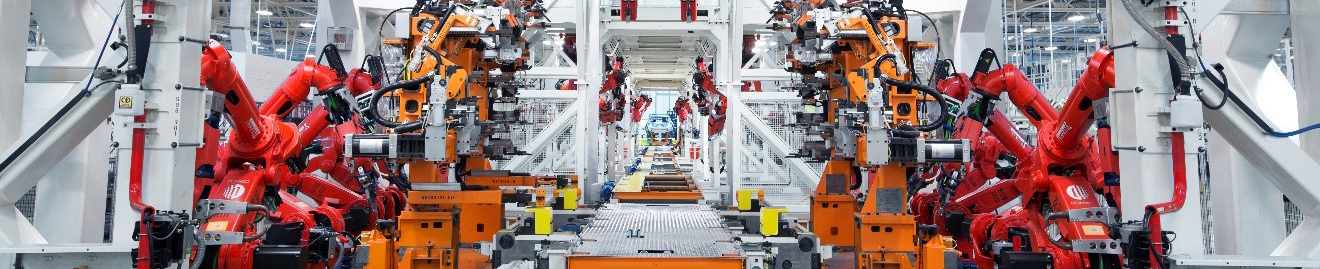
The Applied Economics Office work in manufacturing helps manufacturers and decision makers by developing measurement science that enables estimating and/or forecasting the potential impacts and cost-effectiveness of innovations that advance U.S. manufacturing competitiveness. As laid out in NIST's economic framework for manufacturing competitiveness (NIST AMS 100-80), measurement science for impact follows a continuous-improvement process that includes:
- Ex ante: Predict the potential impact of manufacturer adoption of innovations and R&D investments by change agents (e.g., universities, government agencies, or trade organizations).
- Ex post: Measure and evaluate the realized impact of innovation adoptions and change-agent R&D investments.
- Recalibration: Use what is learned from realized impacts to improve prediction methods and future project designs.
This work includes developing and refining metrics for predicting and measuring impact; estimating predicted and/or realized impacts; examining technologies and systems for potential inefficiencies; tracking U.S. manufacturing competitiveness; and developing the standards, data, and tools needed to enable measurement science for impact.
When the capabilities are integrated, they enable an enterprise-wide system of continuous improvement for advancing U.S. manufacturing competitiveness. Increasingly accurate ex-ante predictions enables better decisions that can drive manufacturers to adopt more cost effective innovations and guide change agents toward more impactful projects. The foundation of this framework—hypothesis testing and impact tracking—enables change agents to learn from realized impacts and continually improve their ability to generate impact.

| 
| 
| 
|
| News, Findings, and Email Subscriber List | Software Tools for Manufacturing | Capital Investment Analysis | Manufacturing Economy |

Studies and Research
Advancing Competitiveness
Circular Economy
Supply Chain Studies
Technology Economics
Contacts
-
(301) 975-4918