U.S. flag

An official website of the United States government

Official websites use .gov
A .gov website belongs to an official government organization in the United States.

Secure .gov websites use HTTPS
A lock ( ) or https:// means you’ve safely connected to the .gov website. Share sensitive information only on official, secure websites.

Projects/Programs

Displaying 1 - 25 of 77

Activated Carbon and FGD Gypsum Standard Reference Materials

Completed
The role of mercury in the environment is now receiving close scrutiny because ultimately it can bioaccumulate as alkyl mercury in seafood with subsequent risk to human health through trophic transfer. Many industrial sources of mercury have been effectively reduced in recent years, but atmospheric...

Advanced Carbon Standards and Technologies

Ongoing
Carbon is an important resource for economic growth and everyday life. As energy demands continue to increase, advanced technologies to efficiently use carbon resources including carbon waste streams are needed. Tapping carbon waste streams can be achieved using a suite of technologies to separate...

Advanced Microscopy for Trace and Bulk Particle Characterization

Ongoing
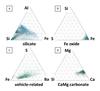
The goal of this project is to help develop innovative metrologies and measurement protocols for micro/nano-scale analysis of particles. In this project, state-of-the-art optical and electron-based microscopy are used to conduct research for quantitative and qualitative analysis of chemical...

Assessing the Environmental, Health and Safety Impact of Nanoparticles

Completed
Impact Nanomaterials have already been incorporated into a large range of commercial products including pharmaceuticals, sunscreens, automobile additives, personal care products, detergents and plastics. Although nanotechnology is changing the way we live, the accidental release of nanomaterials...

Audit of EPA Protocol Gas Suppliers

Ongoing
Protocol gas standards are employed in measurements made for compliance purposes; one of the major uses is for measurements of regulated gaseous species from stationary source emitters, i.e., stack gases. Many of these stationary sources are regulated through the Cap and Trade program; therefore...

Biosurveillance and Pathogen Detection

Ongoing
NIST has established partnerships with other federal agencies to develop standards and measurement solutions to support biosurveillance. These efforts are supported in part through interagency agreements with partner agencies listed below to address their standards needs. PROGRAMS Standards for...

Bringing the SI to Global Atmospheric Greenhouse Gas Measurement

Ongoing
This multifaceted program leverages expertise in three complementary technical focus areas- all of which involve SI-traceable measurements of relevant atmospheric species such as carbon dioxide, methane, water vapor and oxygen. The efforts include gravimetrically based preparation of primary...

Building System Economics

Ongoing
Objective To develop and deploy transparent, open source standards-based data and tools that quantify the life-cycle performance of building technologies and systems through parallel activities focused on developing, releasing, and expanding capabilities and adoption of: (1) the Economic Evaluation...

Carbon Dioxide Measurements and Reference Materials

Ongoing
CO 2 Reference Materials The Gas Sensing Metrology Group at NIST has a long history of providing reference materials to industry, monitoring communities, and academia. The program began in the 1970’s by developing an initial suite of CO2 primary standard mixtures (PSMs) to support the US Department...

Carbon Dioxide Removal Consortium

Ongoing
Industry is developing a variety of carbon capture and removal techniques including nature-based, hybrid, and engineered solutions. The scientific understanding, measurements, and models of these complex systems are still evolving. Furthermore, advanced technologies that enhance the applicability...

CCQM Activities in the Gas Analysis Working Group

Ongoing
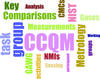
The results from these Key comparisons will be used to benchmark the appropriate Calibration and Measurement Claims (CMCs) of the participating NMIs. CMCs are basically the declared capabilities that an NMI offers to customers, and they are included in a searchable database at the BIPM web site...

Certification of Three Soil SRMs for Inorganic Environmental Measurements

Completed
The three NIST soil SRMs, 2709, 2710 and 2711, have been used worldwide by hundreds of laboratories; combined sales typically exceed 800 units per year. Use of these SRMs provides our customers with tools that are essential for achieving quality assurance in the analysis of contaminant elements in...

Classification Methods for the NIST Biorepository

Ongoing
NIST has been archiving biological and environmental specimens, including marine animal and environmental samples, for over 40 years. Currently, these biospecimens are stored at cryogenic temperatures in the NIST Biorepository located at the Hollings Marine Laboratory in Charleston, SC. Various...

Community Resilience Program

Ongoing
Objective - By 2028, deliver novel resilience planning and analysis methods and tools to support informed decision making by communities of all sizes. By 2028, implement multifaceted outreach, collaboration, and engagement to ensure the effective dissemination of community resilience guidance...

Comparative Mammalian Proteome Aggregator Resource (CoMPARe) Program

Ongoing
Comparative proteomics strives to gain insight into key underlying molecular changes that result in unique phenotypes across related taxa. Proteomic analysis complements comparative genomics by providing evidence of protein abundance, orthogonal to gene copy number and amount of transcript. To...

Comparative Serum Proteomics Project

Ongoing
State-of-the-art biomolecular analysis is no longer limited to model organisms and is becoming routine in non-model organisms. Major drivers of this emerging bioanalytical capacity include increasing accessibility and quality of sequenced genomes as well as high-resolution fast-duty cycle mass...

Data Tools for Environmental Metrology

Ongoing
A recent addition to operations in the NIST Biorepository, we seek out places where NIST scientists get bogged down by the complexity of their data. Research at NIST can generated some of the most complex data in the world, at times requiring six months or more of processing to get to the data...

Design Methods for Resilient Community Systems

Completed
Objective - To advance design and assessment methods for buildings and infrastructure to improve their ability to support the social and economic functions they support and community resilience. What is the technical idea? Quantitative approaches to identify and evaluate the performance of the built...

Development and Implementation of the Community Resilience Planning Guides

Ongoing
Objective By 2028, publish updated community resilience planning and decision-making guidance documents that are supported by natural hazard and resilience planning & analysis tools, based on collaboration and engagement with end-user communities, professional organizations, and government agencies...

Disaster and Failure Studies & Disaster Metrology Studies

Completed
Objective - To provide leadership, coordination, and management for (1) the conduct of disaster and failure studies, including the development and maintenance of an archival data repository, (2) promoting the implementation of recommendations from disaster and failure studies, (3) carrying out the...

Ecogenotoxicity Measurements of Nanoparticles

Completed
Intended Impact Understanding the potential environmental fate of NPs has direct implications to the US economy, as potential environmental and human health impacts of NPs is one of the main factors slowing the commercialization of this technology. Reducing the uncertainty regarding the...

Electromagnetic Field Strength Metrology

Ongoing
NIST calibrates electrically-small field probes from 10 megahertz – 40 gigahertz. These measurements are done in facilities that are periodically compared against other National Metrology Institutes in conjunction with the Bureau International des Poids et Mesures (BIPM). This assures international...
Was this page helpful?