U.S. flag

An official website of the United States government

Official websites use .gov
A .gov website belongs to an official government organization in the United States.

Secure .gov websites use HTTPS
A lock ( ) or https:// means you’ve safely connected to the .gov website. Share sensitive information only on official, secure websites.

Material Measurement Laboratory

MML conducts measurement science across the chemical, biological and material sciences. Activities range from fundamental and applied research to the development and dissemination of certified reference materials and data to industry, academia, and other government agencies to assure the quality of measurement results.

About the Material Measurement Laboratory

The NIST Material Measurement Laboratory (MML) conducts measurement science research to benefit industries based in the chemical, biological, and material sciences, and contributes technical expertise to the development of standards. MML researchers perform fundamental and applied research, evaluate data, and create other programs and tools to assure the quality of measurement results. 

Learn more about MML's work: 
Projects & Programs | News & Updates | Events | Publications | Awards | Press Coverage | Blogs | Patents

Our work supports areas of national importance:

Projects & Programs

Advanced Materials Design: Electronic and Functional Applications

Ongoing
Accelerating Materials Discovery using Machine Learning and AI Using machine learning and AI techniques along with high-throughput DFT calculations materials with specific properties are identified to accelerate the the discovery process for a variety of applications. Some of the specific materials

3D Molecular Orientation Imaging

Ongoing
We have developed 3D orientation measurement techniques by analyzing polarization-dependent molecular vibrational signals based on infrared (IR) absorption [1,2] and coherent anti-Stokes Raman scattering (CARS) [3]. The two imaging modalities are complementary to each other: IR imaging broadly

News & Updates

Publications

A Call for Built-In Biosecurity Safeguards for Generative AI Tools

Author(s)
Mengdi Wang, Zaixi Zhang, Amrit Singh Bedi, Alvaro Velasquez, Stephanie Guerra, Sheng Lin-Gibson, Le Cong, Megan Blewett, Yuanhao Qu, Jian Ma, Eric Xing, George Church, Souradip Chakraborty
The rapid adoption of generative AI (GenAI) in biotechnology offers immense potential but also raises serious safety concerns. AI models for protein engineering

Innocent Until Proven Guilty: The Case for Limiting 'Sequences of Concern' to Those with Demonstrated Pathogenic Function

Author(s)
Gene D. Godbold, Krista Ternus, Kevin Flyangolts, Nicole Wheeler, Michael Parker, Jacob Beal, Peter Carr, KEMPER TALLEY, Caitlin Jagla, Bryan Gemler, Craig Bartling, Rebecca Mackelprang, India Hook-Barnard, James Diggans, Samuel Forry, Sheng Lin-Gibson, Tyler Laird, Todd Treangen, Tessa Alexanian, Gregory Koblentz, Kevin Esvelt, Joshua Gil
Screening synthetic nucleic acid orders for sequences of concern is a necessary part of a healthy biosecurity regime, but it exacts costs for nucleic acid

Awards

Press Coverage

Blog Posts

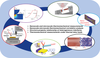
(a) Without an aptamer’s protein ligand, dARTs are transcribed to produce RNA outputs (left), while protein binding represses transcription (middle). The input and output domains are decoupled (right), enabling modular design of dARTs by swapping out the aptamer domain or customizing the output sequences. (b) dARTs serve as the protein sensing layer (left) whose outputs can be coupled with downstream circuits (middle). RNA outputs are measured via fluorescence (right).

Aptamer Regulated Transcription For In-Vitro Sensing And Transduction

NIST Inventors
Samuel Schaffter
It relates to nucleic acid transcription templates, systems, and methods for detection and measurement of molecules and biomolecules (e.g., biomarkers). Particularly, systems and methods utilize a transcription template with an aptamer domain configured to bind a molecule of interest to regulate
Schematic of double-beam modulation spectrometry using a single detector

Single-Detector Double-Path Intensity-Modulation Spectrometer

NIST Inventors
Young Jong Lee
This invention is an optical method that can minimize the noise due to system fluctuations and maximize the signal-to-noise ratio by modulating the analyte beam and the reference beam and detecting the alternating intensity difference by a signal light detector. This invention is based on a double

Contacts

GENERAL INFORMATION: 301-975-8300 (PHONE); [email protected]; 100 BUREAU DRIVE, M/S 8300, GAITHERSBURG, MD 20899-8300

Was this page helpful?